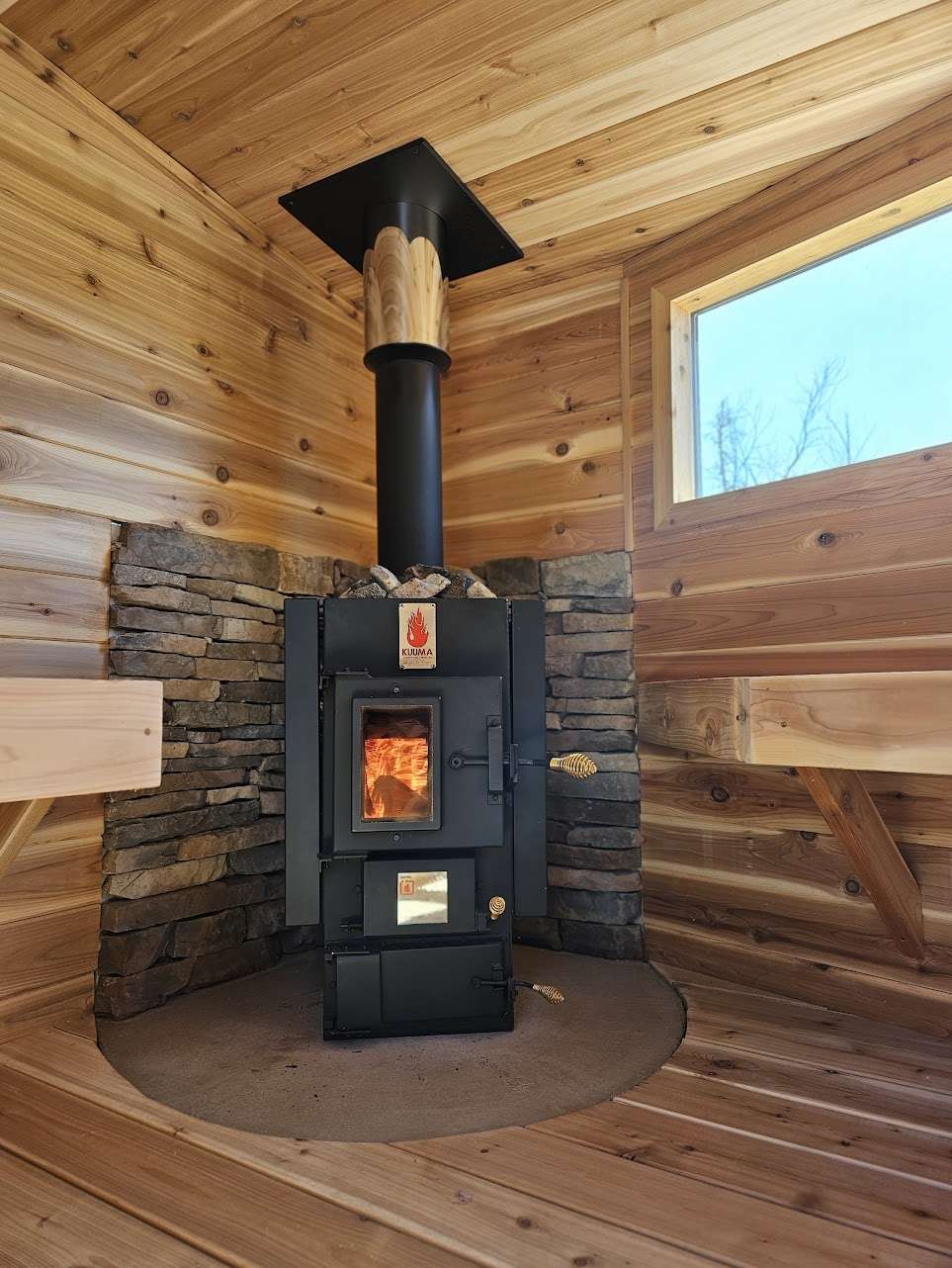
This article is part of our Kuuma Radiant Heat series, where we explain how stove design affects heat, airflow, rock temperature, löyly, and the overall sauna experience.
There is a lot of discussion in the sauna world about radiant heat.
Some of it is valid.
Harsh, direct radiant heat can make a sauna uncomfortable. Anyone who has sat too close to a hot, exposed metal stove knows the feeling. One side of your body gets blasted with heat while the rest of the room may still feel uneven.
That is not the kind of sauna experience most people are looking for.
A good sauna should feel steady, balanced, and comfortable. It should have hot stones, good airflow, strong löyly, and heat that surrounds the body instead of attacking it from one direction.
We agree with that.
Where the discussion often goes wrong is when all steel sauna stoves get lumped together.
Not every metal stove operates the same way.
A basic exposed steel stove can produce harsh radiant heat if hot metal surfaces are radiating directly into the room from multiple sides. That does not mean every heavy steel sauna stove creates the same problem.
The design of the stove matters.
The shielding matters.
The firebox design matters.
The rock mass matters.
The way heat moves through the stove matters.
The way heat is released into the room matters.
And just as important, the way the stove heats the rocks matters.
That is where Kuuma is different.
The Issue Is Not Radiant Heat Itself
Radiant heat is not automatically bad.
Every sauna has radiant heat. Hot stones radiate heat. Warm walls radiate heat. Benches, floors, and even bathers exchange radiant heat once the room is hot.
The real issue is not whether radiant heat exists.
The issue is whether the radiant heat is harsh, concentrated, and uncontrolled.
That is what can make a sauna feel uncomfortable.
A well-designed sauna stove does not need to eliminate radiant heat. It needs to manage the full mix of sauna heat: radiant heat, convective air movement, stored heat in the stove and stones, and heat absorbed by the room itself over time.
That mix is what creates the deeper, steadier heat people remember from a great wood-fired sauna.
This is similar to what SaunaTimes has described as the “jazz trio” of sauna heat transfer: radiant, conductive, and convective heat working together. The best sauna heat is not one instrument playing too loud. It is the right mix.
That has always been part of the Kuuma approach.
That same thinking can be seen across Kuuma products. Our patented Kuuma Vapor-Fire forced-air wood furnace was recognized for having the cleanest EPA test results of any indoor cordwood furnace tested at the time. That did not happen by accident. A good wood-burning system has to do more than make heat. It has to control the fire, extract heat efficiently, transfer that heat into the system, move it where it is needed, and burn clean while doing it.
Uncontrolled wood heat is easy.
Controlled wood heat is the hard part.
That same philosophy carries into our sauna stoves.
Whether we are heating a home with a Kuuma Vapor-Fire furnace or heating a sauna with a Kuuma wood stove, the goal is the same:
Better wood heat.
Controlled combustion.
Useful heat transfer.
Steady recovery.
Cleaner burning.
Delivered in a way that actually works.
What Makes Harsh Radiant Heat Uncomfortable
A normal exposed metal stove can throw direct heat off the front, sides, back, and corners. If those hot metal surfaces are fully exposed, the stove can feel intense and uneven to anyone sitting near it.
The person closest to the stove may feel too much heat on one side of the body. Meanwhile, the rest of the room may still need time to catch up.
Instead of feeling surrounded by sauna heat, you feel like you are sitting next to a hot object.
That is the kind of radiant heat people are usually criticizing.
And they are right to criticize it.
But that is not how a properly designed Kuuma system is intended to operate.
Kuuma Is Not a Normal Exposed Steel Box Stove
Kuuma sauna stoves are built around a different idea.
A Kuuma is not designed to simply blast heat off every exposed steel surface. Depending on the model, Kuuma controls and mitigates direct radiant heat through insulated shielding, firebrick, internal baffling, heavy stove mass, controlled air movement, water tank placement, and rock mass.
That combination changes how the heat enters the room.
Instead of sharp, uncontrolled heat from bare metal on all sides, a Kuuma is designed to create a steadier heat source with better recovery, better room heating, and a more balanced wood-fired sauna experience.
The goal is not to remove the character of a wood-fired sauna.
The goal is to make that heat better.
Burn Wood Better.
Real-World Heat Shield Temperature Notes
The temperature images below are a helpful visual example of what we mean by controlled heat delivery.
They are not meant to replace installation clearances, owner’s manual requirements, or required wall protection. Always follow the current Kuuma owner’s manual for your specific stove and installation.
But they do help show an important point:
A shielded Kuuma system does not behave the same way as a bare metal stove radiating aggressively from every side.
When insulated heat shields, rock shields, water tanks, or surrounding rock mass are used, they change how heat moves around the stove. Direct radiant heat from certain surfaces is reduced, air is allowed to move around the stove, and more heat is delivered through a combination of convection, stored heat, useful front radiant warmth, and hot rock mass.
The goal is not to make the stove cold.
The goal is to manage where the heat goes.
A Kuuma still produces serious heat. It still heats the room. It still heats the rocks. It still delivers strong löyly. But it is designed to control, buffer, and mitigate the kind of harsh radiant heat people often associate with basic exposed metal stoves.
Notice how the front and stovepipe are doing serious heating, while the shielded side areas are being managed differently.
These real-world readings help show how shielding changes heat delivery around a Kuuma stove. They are educational examples only and do not replace required clearances or owner’s manual installation instructions.
The Classic Kuuma Legacy: Shielding and Convection

The Classic Kuuma Legacy is a good example of why “heavy steel stove” is too broad a label.
Yes, the Classic Kuuma Legacy is heavily built. But it is not just an exposed steel box sitting in the sauna.
The Classic Kuuma Legacy can use insulated side and rear heat shields, rock shields, or a water tank to reduce direct radiant heat from certain surfaces and help create an air path around the stove. Cooler air near the floor can move into that space, warm as it passes around the stove, and rise naturally into the sauna room.
That is natural convection.
The front of the stove remains exposed intentionally. Some front radiant heat is useful. It helps warm the room, the floor area, and the lower part of the sauna.
The problem is not useful radiant warmth from the front.
The problem is uncontrolled radiant heat from every side.
The Classic Kuuma Legacy helps control that with its shield system, firebrick-lined firebox, heavy thermal mass, and rock heat.
It should not be judged the same way as a thin, unshielded metal box stove.
The Kuuma BluFlame: Controlled Heat Delivery

The Kuuma BluFlame was designed around controlled heat delivery.
Depending on the model and configuration, the Kuuma BluFlame uses either a large rock mass approach or a shielded stove body with controlled air release to help move heat into the sauna in a more balanced way.
That matters.
A stove should not just make hot metal. It has to heat the room and heat the rocks. It has to recover after water is thrown. It has to support good löyly. And it should do that while burning wood cleanly and efficiently.
The Kuuma BluFlame is built for that balance.
The shielded-body design reduces direct side and rear radiant heat while allowing heated air to release back into the room through controlled openings. Cooler air can move in low, warm around the stove body, and release back into the room through natural convection.
The front of the stove still provides useful radiant warmth. But the side and rear radiant intensity are mitigated.
Other Kuuma BluFlame configurations use substantial rock mass to absorb, store, spread, and release heat more gradually.
Either way, the point is the same: the Kuuma BluFlame is not a normal exposed steel stove. It is a Kuuma system designed to deliver heat and löyly while controlling the harsh radiant heat people often associate with basic metal stoves.
The Kuuma Low Profile: Rock Mass Buffers the Heat

The Kuuma Low Profile handles radiant heat in a different way.
Instead of relying on exposed steel surfaces alone to heat the room, the Kuuma Low Profile uses a low firebox and a large surrounding rock mass. The fire heats the stove body. The stove body heats the rock. The rock absorbs that heat, stores it, and releases it more gradually into the sauna.
That does not eliminate radiant heat.
It mitigates it.
There is a big difference between harsh radiant heat from an exposed metal wall and broader, softer heat released through a large mass of hot stones. Hot rock still gives off radiant heat, but it spreads that heat over a larger surface area and helps buffer the feel.
The Kuuma Low Profile mitigates the harshness of exposed-metal radiant heat by using a large rock mass to absorb, store, spread, and release heat more gradually.
It is a low, heavy, rock-driven sauna heater. Its design helps buffer heat, support strong löyly, and reduce the sharp radiant feel people often associate with basic metal stoves.
Again, this is not a normal exposed metal box stove.
Clearance Requirements Are Not a Sauna Comfort Rating
Another common mistake is treating stove clearance numbers as a direct measure of how harsh a stove feels in the sauna.
Clearances are safety requirements. They tell you how far combustible materials need to be from the stove for an approved installation.
They are not a sauna comfort rating.
For example, Classic Kuuma Legacy clearances were established through the UL listing process. Those clearances are installation safety requirements for combustible materials. They should not be treated as a direct measurement of how harsh the sauna feels to a bather.
That distinction matters.
A listed clearance does not mean the stove is blasting harsh, radiant heat from every side. It means the stove has approved installation requirements that must be followed.
The actual sauna experience depends on the whole system: stove design, shielding, firebrick, rock mass, ventilation, room layout, ceiling height, bench placement, and how the stove is operated.
Using a clearance number alone to judge sauna comfort misses the bigger picture.
Controlled Combustion Matters Too
Stove design matters.
So does stove operation.
One of the benefits of a well-designed wood-fired sauna stove is that it can bring the room up to temperature with strong heat during preheat, then be operated in a more controlled way once bathers enter the sauna.
That matters because direct radiant heat is not only affected by the stove body, shielding, rocks, and room layout. It is also affected by the rate of combustion.
During preheat, higher heat output helps warm the stove, stones, benches, walls, floor, and the mass of the sauna room. That stored heat is part of what helps the sauna feel even and settled once people are inside.
But once the room is hot and bathers are using the sauna, the fire does not need to dominate the experience. By controlling airflow and combustion rate, the stove can continue to support room heat, rock heat, recovery, and löyly without turning the firebox into an overpowering radiant source.
This is an important balance.
You need high firebox temperatures for clean, efficient combustion. But that heat also has to be managed. Firebrick, heat shields, stone surrounds, stove mass, and proper airflow all help buffer and control how that heat moves into the room.
The answer is not simply to run the fire cooler. If radiant output is controlled only by lowering firebox temperature too much, combustion can become less efficient, emissions can increase, and recovery can suffer.
A better stove controls the fire while still protecting the steel, maintaining clean combustion, heating the stones, and delivering steady heat into the room.
That is the difference between uncontrolled heat and controlled wood heat.
Good Sauna Heat Comes From the Whole System
A great sauna is not created by one feature.
It is the whole system working together.
With Kuuma, that includes:
- Heavy stove mass
- Firebrick-lined firebox
- Internal baffling
- Insulated shielding where needed
- Controlled air movement
- Controlled combustion
- Proper stove operation
- Useful front radiant warmth
- Hot sauna rocks
- Proper ventilation
- A well-built sauna room
When those pieces work together, the heat feels different. It is steadier. It recovers well. It produces strong löyly. It does not feel like sitting beside a thin exposed metal box.
That is the difference.
The Main Point
Radiant heat is not the enemy.
Harsh, uncontrolled radiant heat is the problem.
That is an important distinction.
Kuuma sauna stoves are designed to control, buffer, and mitigate radiant heat in different ways depending on the model.
The Classic Kuuma Legacy uses insulated side and rear heat shields, rock shields, or a water tank to reduce direct radiant heat and help create convection.
The Kuuma BluFlame uses either a large rock mass approach or a shielded stove body with controlled air release to help move heat into the room in a more balanced way, depending on the model.
The Kuuma Low Profile uses a large rock mass to buffer and spread heat.
None of these operate like a normal exposed metal stove blasting radiant heat from every side.
So the next time someone says all heavy steel sauna stoves create too much radiant heat, the better question is:
How is the stove actually designed to deliver heat and löyly?
That is what matters.
A sauna stove has to do more than make hot metal. It has to heat the room, heat the rocks, create steady airflow, recover after water is thrown, and still burn the wood cleanly and efficiently.
That is not easy to do.
Many stoves can do one or two of those things well. Fewer can do all of them together.
At Kuuma, that has always been the goal: controlled heat delivery, strong rock heat, clean combustion, steady recovery, and a wood-fired sauna experience people remember.
We are not trying to build the lightest stove, the cheapest stove, or the trendiest stove.
We are building wood-fired sauna stoves for durability and longevity that burn better, hold heat better, and deliver both heat and löyly the way a sauna stove should.
Burn Wood Better.
Continue Reading
Radiant heat is only one part of the sauna experience. Stove design, shielding, rock mass, airflow, combustion, and recovery all work together.
This article is the overview for our Kuuma Radiant Heat series. After the model-specific articles are published, we will link them here:
- How the Classic Kuuma Legacy Radiant Heat Mitigation
- How the Kuuma BluFlame Delivers Controlled Heat and Löyly
- How the Kuuma Low Profile Uses Rock Mass to Buffer Heat
You can also compare the full Kuuma wood-burning sauna stove lineup on our sauna stove pages.


You must be logged in to post a comment.